
Paper and Print: Exploring the history of paper making in Exeter
Saturday 8 to Saturday 15 February, Positive Light Projects, 184-187 Sidwell St, Exeter EX4 6RD
A sculptural paper installation and a fictional sound story are helping to reveal the tales behind Exeter’s paper making past.
Double Elephant Print Workshop will be showcasing the fascinating discoveries made during Paper and Print – a year-long community research project into Exeter’s paper mills. The exhibition is the culmination of the project which has been run by Double Elephant in partnership with Prof Nicola Thomas, Head of Geography at the University of Exeter, and funded by The National Lottery Heritage Fund.
Working with a team of volunteer community researchers, they have pieced together stories of the people working in the mills.
A team of 15 researchers visited former mill sites in Exeter and along the Exe and Culm rivers. They talked to residents, descendants of mill owners and former paper mill workers. They collected memories, oral histories and undertook archive research in the Devon Heritage Centre, Exeter Cathedral Library & Archives and The Devon and Exeter Institution.
The stories the uncovered include:
15 year old Susan Johns was badly injured at Countess Wear paper mill in 1865. She lost an arm, and newspaper records show that Topsham timber merchant John Follett led a national campaign to raise money for her.
George West was born in 1823. He learned his papermaking skills at Bradninch, and then went to the USA where he became known as The Paper Bag King. He was a pioneering papermaker, wealthy businessman and owner of many paper mills. In middle age, he moved into politics and served two terms in the US Congress.
Rodney Coffin has been a Countess Wear resident for 40 years. He lives next to the old mill building, and described how the leat has changed over the years – from teaming with fish and wildlife to an overgrown dried water channel.
The research also uncovered stories of child apprentices learning their trade, the journeying paper-makers travelling between mills, the workers who lost their lives in mill fires, the rag pickers living in the west quarter of Exeter, and those who came to Exeter from India to learn the trade. This evidence of the people who worked in the mills is part of the less visible history of Exeter’s paper industry.
As part of the project, local families and schools took part in papermaking workshops and events. To deliver the sessions, Double Elephant partnered with Devon Wildlife Trust, who now manage some of the former mill sites.
Two new artworks were commissioned in response to the research:
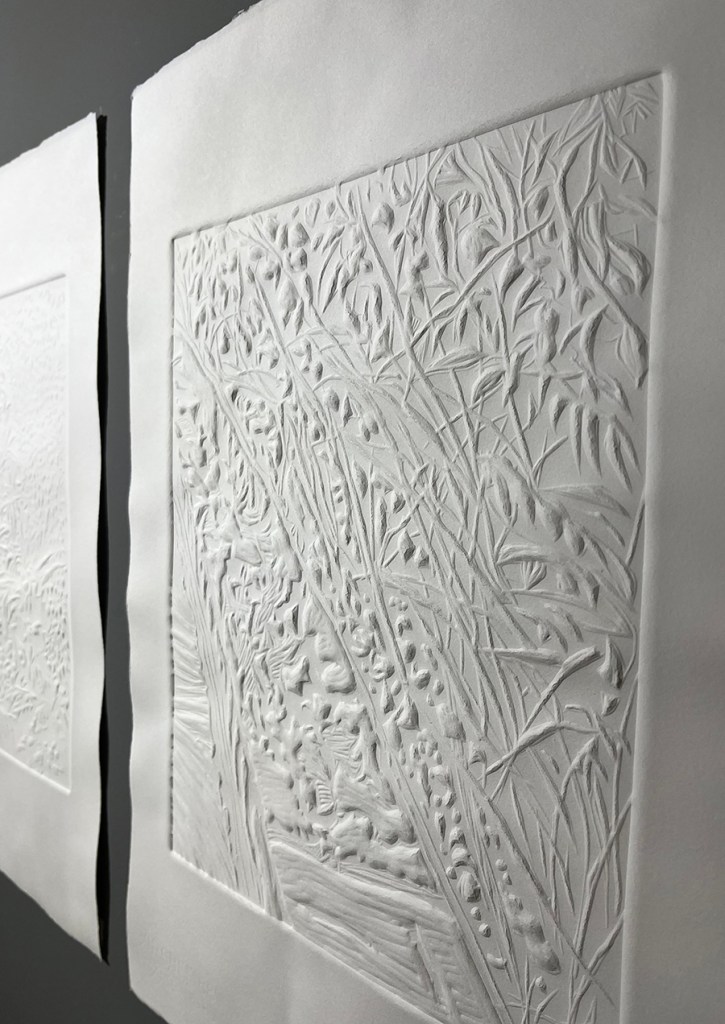
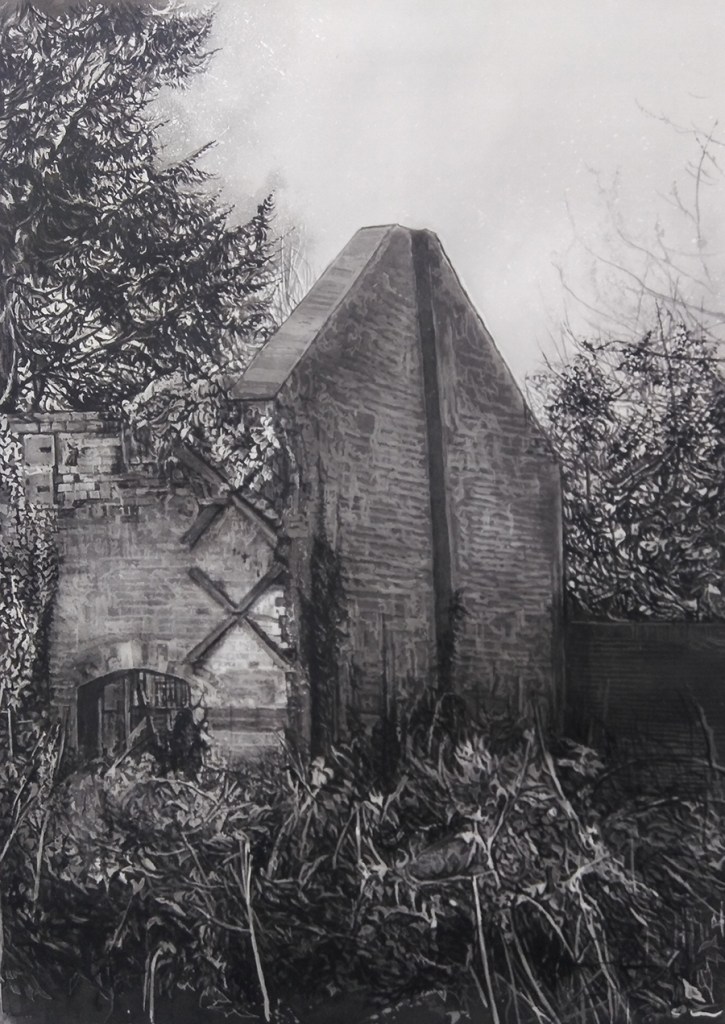
Vestigia is a composite installation created with paper embossed linocuts by Juliette Losq. The title comes from the Latin for “footprints or traces”, and is intended to suggest the way in which we now encounter the buildings and defunct machinery that once comprised Exeter’s paper mills. Many of these structures are hidden and may be discovered along walking routes once trodden by former mill workers.
Artist Juliette Losq said:
“I am interested in exploring the papermaking landscape by reinterpreting fragments of the milling process which have been left as traces. Based on recommendations and routes mapped out by the project volunteers, I walked paths that passed beside or through several former mill sites. In some cases the structures had been repurposed as contemporary dwellings. In others they appeared as fragments emerging from woodland, grass or ivy.”
Paper Heron is a fictional sound story by Ellen Wiles, exploring the world of papermaking in Exeter at its peak in the mid-19th Century. The short story is narrated by Effie, a young girl working as a rag-sorter in a paper mill on the River Exe. Her secret creative ideas and dreams are only shared in her private conversations with a grey heron. But a chance encounter with the Master’s daughter opens up an opportunity for her to visit the famous Crystal Palace, and her imagination is blown wide open.
Sound Artist Ellen Wiles said:
“I had a fascinating time working on this commission. I learned a lot from the research avenues that the volunteers chose to pursue and spent time in archives myself, particularly The Devon and Exeter Institution and the Devon Heritage Centre, and I read copious books and articles about the history of papermaking, particularly relating to women, and the Great Exhibition.”
Emma Molony, Project Manager, Double Elephant said:
“We are really delighted to be working with Ellen and Juliette who have both invested so much time and creative energy in using the research from the volunteer team to inspire two new and very different artworks. These provide imaginative and immersive ways for the public to envisage this incredible part of Exeter’s history.”
The exhibition includes a Story Map – a creative visualisation of the discoveries in the project’s research blog. There will also be a display of the research, historic objects, and creative responses by the volunteer research team.
Members of the project team will be at the exhibition each day to help visitors find out more about Exeter’s papermaking history.
Paper and Print: Exploring the history of papermaking in Exeter runs from Saturday 8 to Saturday 15 Februaryat Positive Light Projects, 184-187 Sidwell St, Exeter EX4 6RD.
On Friday 7 February there is a listening event and artist Q&A with Paper Heron artist Ellen Wiles. More details and ticket booking info can be found online.
There is a parallel, smaller exhibition at The Queens Building, University of Exeter until 28 March 2025.
Exhibition details
Exhibition title: Paper and Print: Exploring the history of papermaking in Exeter
Dates: Saturday 8 – Saturday 15 February 2025, 11 – 3pm daily
(closed Mon 10 Feb)
Venue: Positive Light Projects, 184-187 Sidwell St, Exeter EX4 6RD
Paper Heron: a listening event + artist Q&A
Friday 7 February 2025 at Positive Light Projects
7 – 8pm, ticketed event, £5
More details and book your tickets here or via Double Elephant website.
 Gillian Taylor PR
You must be logged in to post a comment.