300 Somerset sheep fleeces will be used to create an enormous sculpture as part of an exhibition inspired by the story of wool. A film which takes the viewer on a reflective journey exploring wool from fleece to yarn will also feature.
The exhibition – Spinning a Yarn – will take place at the Somerset Rural Life Museum as part of Somerset Art Weeks.
The exhibition is organised by Somerset Art Works in partnership with the South West Heritage Trust. There is also be a programme of community and school workshops and talks as part of the project.
The exhibition features two major new commissions by artists Nicola Turner and Trevor Pitt.
Trevor Pitt’s film ‘Somerset Yarning’ takes the viewer around the county from sunrise in the Mendips to sunset on the Quantocks. Trevor interviewed people who work with sheep and wool, capturing their personal stories and filming moments in their working lives. The film is a reflective journey, following fleeces from sheep shearing to their creative use by artists across the county.
Trevor filmed sheep farmers at Fernhill Farm, a regenerative eco farm in the Mendip Hills. Jen Hunter and Andy Wear run commercial flocks of sheep bred for their fine wool and their ability to restore biodiversity by grazing in larger nomadic-style flocks.
Artist Liz Clay works with a fleece from Fernhill Farm, which she washes, cards and uses to make felt. Bec Briar was filmed on her smallholding near Wiveliscombe, where she uses the fleeces of her sheep to spin and weave.
The film ends with sunset on the Quantocks with the voice of sheep farmer Janet White who died in May 2024 at the age of 94, two months after Trevor interviewed her. The film follows her family and the places she talked about in her interview.
The film is slow and reflective, aiming to bring Somerset into the historic barn and give the viewer an emotional connection to sheep and wool.
Trevor’s mother taught him to knit as a child, and he redeveloped a connection with wool as an adult when he began to explore the lives of his mother and aunts on a council estate in Birmingham.
Trevor said:
“While visitors to the museum gain an understanding of the history of the county, the film gives a more emotional response to Somerset, its land, its people and its sheep.
“It’s just been an amazing project to work on. It’s given me the opportunity to get to know Somerset personally. I’ve met sheep farmers, people who manage the land, makers and artists, and people have been so generous letting me into their lives. I’m a city boy, and from my point of view, it’s been a real eye opener; coming into the county from outside, gives you a different perspective. It’s been a privilege, and I really want to share that with people.”
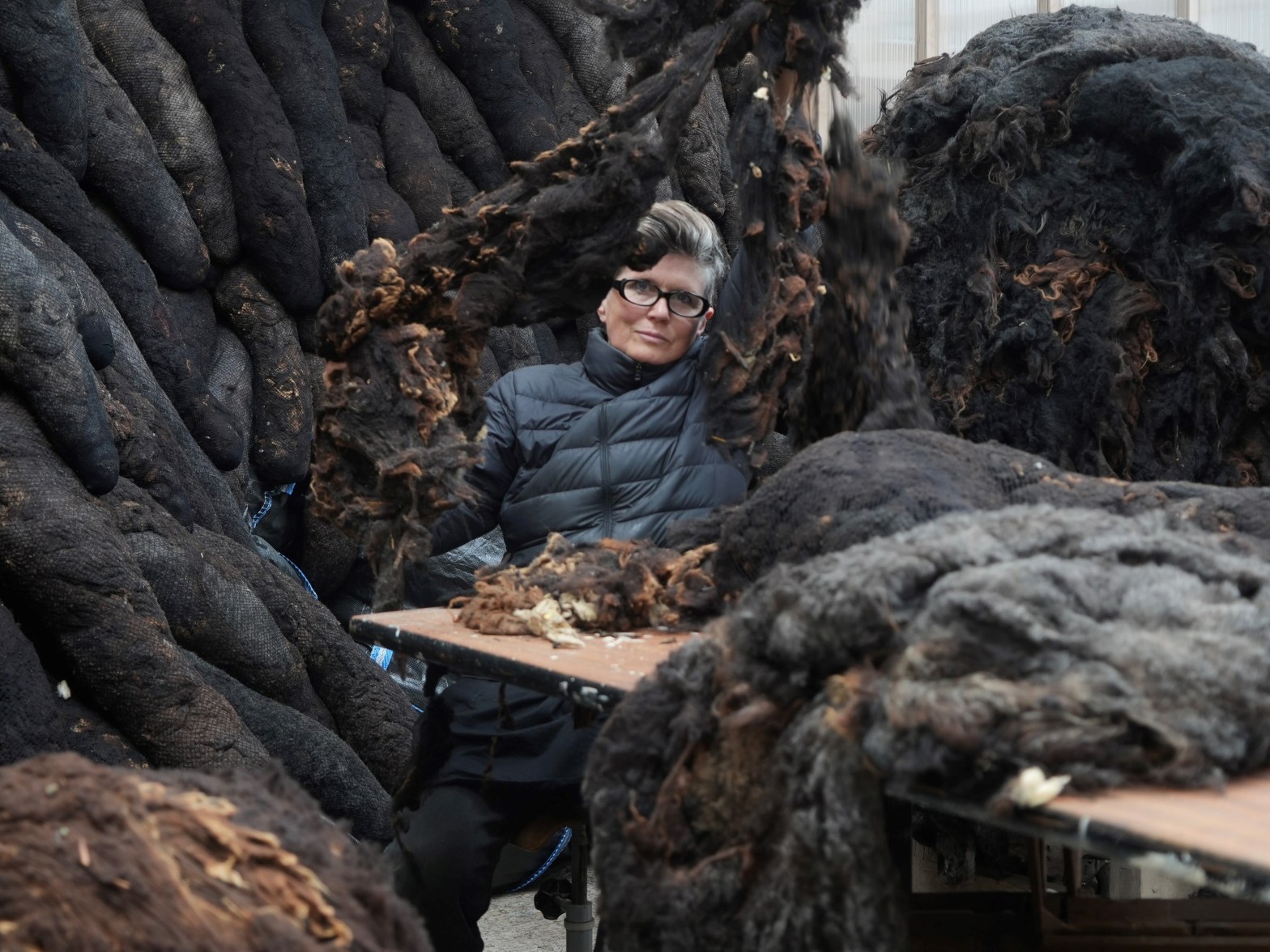
Nicola Turner will create a huge sculpture with enormous woollen tendrils reaching the high beams in the barn. Visitors will be able to walk around and through the sculpture in its historic location.
Nicola has over 300 fleeces from Black Welsh Mountain, Hebridean and Zwartbel sheep which she has collected locally to create the installation. She is interested in how wool has been used over the years, and has been researching the use of wool by humans the; techniques of processing wool over the centuries. As part of her research, she watched a sheep being sheared with the same kind of clippers that have been used since 500 BC.
The project in this location has a special significance for Nicola, whose ancestors ran a fulling mill on the outskirts of Bath and were the Clothiers of Colerne and Batheastern until 1784.
Nicola said:
“This project will combine my love of working with wool and my interest in historic buildings. I’m interested in the connection between my material and the environment in which it is placed.
“I’m fascinated by our connection to wool and why we find it so comforting. Why do some people not like the smell of lanolin while others love it? What stories are interwoven into our associations of wool?”
As part of the project, community groups and individuals have been creating their own woollen art to raise awareness of some of Somerset’s endangered species. Led by artists Nina Gronw-Lewis and Lydia Needle, local people have used needlefelt, appliqué, stitch and other techniques to make dormice, ferns, large blue butterflies and common blue damselflies, which will feature in the exhibition.
Somerset Art Works Creative Director Carol Carey said:
“I’m really looking forward to seeing how people respond to this exhibition. I think they will love the way that these two exceptional artists have worked with wool. A focus on wool allows us to explore the heritage of the landscape, considering how we can nurture our future relationship with the countryside.”
“Our theme this year is Landscape: Flux and Flow. This is so central to people’s lives and will become increasingly so. Interpretation and communication of the complex social and cultural issues that arise due to the impacts of climate change can be best delivered and understood via art.”
Exhibitions Manager for the South West Heritage Trust Sarah Cox said:
“Over the centuries Somerset has been noted for the production of different cloths – wool, linen, and silk, benefiting from natural resources of water, soils and animals, combined with the skills needed to turn the raw materials into fabric. The exhibition will explore its history and reflect the diversity of uses of wool across the county today.”
Spinning a Yarn takes place at Somerset Rural Life Museum, Glastonbury as part of Somerset Art Weeks Festival which runs from 21 September to 6 October. The exhibition continues until 2 November. Guides are available at cultural venues, including libraries, galleries, museums and tourist visitor centres as well as online at somersetartworks.org.uk
Huge sculpture and film inspired by the story of wool in Somerset
 Gillian Taylor PR